I came across this great article via Marrekie's astounding gallery on DeviantArt.
It is jam packed with awesome designs/concepts from rollers and crawlers to techs and mechs.
Sunday, January 31, 2016

Sunday, September 27, 2015
Ship Shape
This amazing link was just sent to me by my friend and host of ContactLight.net
Ship.ShapeWright.com
It randomly constructs a polygon spaceship. You can keep clicking "Build It" or refresh the page to generate one after another. You can even name your own vessel.
Flip, twist, spin, and zoom for hours and hours!!
Ship.ShapeWright.com
It randomly constructs a polygon spaceship. You can keep clicking "Build It" or refresh the page to generate one after another. You can even name your own vessel.
Flip, twist, spin, and zoom for hours and hours!!
Sunday, May 24, 2015
Traveller Character Generator
Admittedly, I have never played Traveller before. I bought the rule book, couldn't really get into it, and decided to trade it in for something else.
But this little beauty has been devouring my time lately!
MegaTraveller Basic Character Generator
I just can't stop rolling out characters:
An evil genius doctor that got away with murder and unlocked the key to (near) agelessness.
A nine-fingered rogue/smuggler that saves a diplomat's daughter from slave traders.
A blade-wielding mercenary with serious impulse control problems that likes to collect trophies.
A shy and awkward brainiac that serves as the private surgeon to navy officers. By age 34 he's already been decorated with the Naval Regal Cross and the Imperial Shield of Valor.
But this little beauty has been devouring my time lately!
MegaTraveller Basic Character Generator
I just can't stop rolling out characters:
An evil genius doctor that got away with murder and unlocked the key to (near) agelessness.
A nine-fingered rogue/smuggler that saves a diplomat's daughter from slave traders.
A blade-wielding mercenary with serious impulse control problems that likes to collect trophies.
A shy and awkward brainiac that serves as the private surgeon to navy officers. By age 34 he's already been decorated with the Naval Regal Cross and the Imperial Shield of Valor.
Thursday, December 4, 2014
Wednesday, July 30, 2014
Ion the Horizon
I have had spaceship design on the brain lately, which led me to think about ion engines as sub-lightspeed travel.
If you think of space travel as a marathon, not a sprint, then you also need to think about what people would do to fill the countless hours, days, weeks, etc. Think of it as the longest road trip ever.
If you had a hyperspace jump drive that allowed FTL travel, think of the adventures you'd miss along the way.
So how fast (or slow) are we talking here? Well when you figure that the speed of light is 300,000 km/sec, then the paltry 20-50 km/sec of an ion engine seems abysmally slow.
Currently built with a lifetime of approximately 20,000 hours, ion thrusters could burn for about 833.33 days or 2.28 years.
And if the exhaust velocity reaches its maximum range of 50 km/sec or 180,000 km/hour (111,846.5 mph) that means you could travel 3,600,000,000 km (2,236,936,292 miles) in the lifetime of that particular ion engine. Even if you could only achieve a "slow burn" of 20 km/sec (44,739 mph) that would still carry you 1 billion 440 million miles. Maybe you could squeeze a few more million miles out of it since you're not burning as hot.
If the speed and distance are too much to wrap your head around, think of it in terms of scale.
The circumference of the Earth is 24,901 miles. Rounding that up to 25,000 miles, you could still circle the planet 57,600 times. But who wants to only drive around the block when you can get on the open road and really let the ponies run?
The moon is 238,900 miles away. You could get there in just a little over 2 hours.
It took Neil Armstrong over 4 days.
Let's say you wanted to swing by the future colony on Mars, which is about 35 million miles away.
It would take you 13 days. Ok, that road trip is starting to get wearisome. That's like driving from LA to NYC and back.
But let's say you have a spacious RV with lots of room to stretch out and all the high-tech, time-suck gadgets of a deep-space faring civilization. And like the best road trip mix of tunes ever!
You are going to push to the very edge of our solar system - 7 billion 440 million miles.
You'd get there in 7.59 years and you'd have to change out your engine 5 times. Let's hope you have James T. Kirk's Triple A card.
By the way, instead of a little hula girl on your dashboard you have a Buzz Lightyear bobble head.
If you think of space travel as a marathon, not a sprint, then you also need to think about what people would do to fill the countless hours, days, weeks, etc. Think of it as the longest road trip ever.
If you had a hyperspace jump drive that allowed FTL travel, think of the adventures you'd miss along the way.
So how fast (or slow) are we talking here? Well when you figure that the speed of light is 300,000 km/sec, then the paltry 20-50 km/sec of an ion engine seems abysmally slow.
Currently built with a lifetime of approximately 20,000 hours, ion thrusters could burn for about 833.33 days or 2.28 years.
And if the exhaust velocity reaches its maximum range of 50 km/sec or 180,000 km/hour (111,846.5 mph) that means you could travel 3,600,000,000 km (2,236,936,292 miles) in the lifetime of that particular ion engine. Even if you could only achieve a "slow burn" of 20 km/sec (44,739 mph) that would still carry you 1 billion 440 million miles. Maybe you could squeeze a few more million miles out of it since you're not burning as hot.
If the speed and distance are too much to wrap your head around, think of it in terms of scale.
The circumference of the Earth is 24,901 miles. Rounding that up to 25,000 miles, you could still circle the planet 57,600 times. But who wants to only drive around the block when you can get on the open road and really let the ponies run?
The moon is 238,900 miles away. You could get there in just a little over 2 hours.
It took Neil Armstrong over 4 days.
Let's say you wanted to swing by the future colony on Mars, which is about 35 million miles away.
It would take you 13 days. Ok, that road trip is starting to get wearisome. That's like driving from LA to NYC and back.
But let's say you have a spacious RV with lots of room to stretch out and all the high-tech, time-suck gadgets of a deep-space faring civilization. And like the best road trip mix of tunes ever!
You are going to push to the very edge of our solar system - 7 billion 440 million miles.
You'd get there in 7.59 years and you'd have to change out your engine 5 times. Let's hope you have James T. Kirk's Triple A card.
By the way, instead of a little hula girl on your dashboard you have a Buzz Lightyear bobble head.
Curvaceous Cargo
Because I was bored and looking for something fun to do, and because I'm a nerd that thinks "fun" is using dice roll generators to plot the probability curve of sci-fi cargo, I have modified my original 2d10 cargo curve.
The NEW version:
2. livestock
3. raw materials: ore, lumber, plastics, chemicals
4. manufactured goods and textiles
5. simple electrical/mechanical parts
6. advanced/assembled electronics and machines
7. robotics and cybernetics
8. polymers and synthetics
9. medical supplies: diagnostics, vitamins, vaccines
10. foodstuffs: seeds, spices, alcohol, preservatives
11. petrochemicals, fuel cells, propellant
12. weapons, ammunition, explosives
13. precious metals and silicates
14. radioactive materials/waste
15. luxury items
16. exotic items
17. stolen items
18. illegal weapons and modifications
19. illegal drugs, chemicals, exotics
20. human cargo: slaves, wetware, corpses
I changed the layout specifically based on what I thought would be the most likely cargo - fuel.
Then to either side of that I arranged medicine, food, weapons, and precious metals. I think that about covers it for the five most common things you'd find in a ships hold.
I figured the least likely things would be livestock and human cargo (not the paying passenger type).
If you can't tell, I had Firefly in mind quite a bit when I crafted this.
And in saving the best for last, I recently came across this Star Citizen: MISC Freelancer video.
The NEW version:
2. livestock
3. raw materials: ore, lumber, plastics, chemicals
4. manufactured goods and textiles
5. simple electrical/mechanical parts
6. advanced/assembled electronics and machines
7. robotics and cybernetics
8. polymers and synthetics
9. medical supplies: diagnostics, vitamins, vaccines
10. foodstuffs: seeds, spices, alcohol, preservatives
11. petrochemicals, fuel cells, propellant
12. weapons, ammunition, explosives
13. precious metals and silicates
14. radioactive materials/waste
15. luxury items
16. exotic items
17. stolen items
18. illegal weapons and modifications
19. illegal drugs, chemicals, exotics
20. human cargo: slaves, wetware, corpses
I changed the layout specifically based on what I thought would be the most likely cargo - fuel.
Then to either side of that I arranged medicine, food, weapons, and precious metals. I think that about covers it for the five most common things you'd find in a ships hold.
I figured the least likely things would be livestock and human cargo (not the paying passenger type).
If you can't tell, I had Firefly in mind quite a bit when I crafted this.
And in saving the best for last, I recently came across this Star Citizen: MISC Freelancer video.
Friday, June 27, 2014
C.A.P. versus Superium
Back in April 2013 I posted about the great Superium that runs vast sectors of the galaxy.
And if sci-fi shows like Firefly, Star Wars, and Star Trek (or just plain old good storytelling) have taught us anything, it's that the great and powerful government needs some upstarts to maintain a standing conflict.
Thus I have settled on the Superium's adversaries - the C.A.P. (Confederation of Allied Planets).
Obviously I couldn't use "the Federation" without immediately conjuring Star Trek connections. Besides, I don't particularly like the notion of a federation. When I think of the Fed I think of: over-reaching, arrogant, taxation, and otherwise meddling for meddling's sake.
But I also couldn't call it "the Confederacy" without blundering into associations with the South in the U.S. Civil War.
Perhaps, like myself, you need an easy comparison between a Confederation and Federation.
Think of the United States when they were in fact just that. United states. Before the formation of the federal government, the original colonies chose to operate together for a greater good/benefit.
A confederation is voluntary. A federation isn't necessarily.
A confederation lacks a powerful core, instead being governed by a council of sovereign entities.
A federation typically has a centralized "seat of power" like a Presidency or Chancellor.
In a confederation the system only lasts so long as the various parts decide to participate. This hopefully leads to more cooperation because the entire thing crumbles if agreeable terms aren't met and maintained for everyone.
In a federation, the votes are tallied and the law becomes the binding "agreement" which must then be enforced and upheld, even if you were one of them that got out-voted.
A confederation grants a certain amount of autonomy to its member states to govern themselves in matters of customs, trade, law, etc. They operate together in terms of protecting the whole by protecting the parts.
A federation typically controls several aspects of its participants from economic concerns to housing, travel, and education. A norm/average is expected to be upheld for everyone, like it or not. And certain cities or regions are given priority status, while others are ignored.
I was thinking of calling it the Coalition of Allied Planets, but that is much too informal to operate in large numbers. A coalition is generally on a much smaller scale, say a dozen individuals. They work together for a short time to meet a short term coal. Think of it like a small community of farmers all pitching in to plant, tend, and harvest a variety of crops to be held in a central storehouse. That might help them last through a few hard winters, but it's not necessary forever.
So the background could be that the C.A.P. started as a loose coalition to repel a common threat - pirates, slavers, smugglers, what have you. Over the years they realized the benefit of continuing to work together in defense of their homes and trade routes. Gradually they formalized into the Confederacy of Allied Planets. It maintains peace among them as neighbors because a war between them would harm both and benefit none.
There you have it, the Confederation versus the Superium.
And if sci-fi shows like Firefly, Star Wars, and Star Trek (or just plain old good storytelling) have taught us anything, it's that the great and powerful government needs some upstarts to maintain a standing conflict.
Thus I have settled on the Superium's adversaries - the C.A.P. (Confederation of Allied Planets).
Obviously I couldn't use "the Federation" without immediately conjuring Star Trek connections. Besides, I don't particularly like the notion of a federation. When I think of the Fed I think of: over-reaching, arrogant, taxation, and otherwise meddling for meddling's sake.
But I also couldn't call it "the Confederacy" without blundering into associations with the South in the U.S. Civil War.
Perhaps, like myself, you need an easy comparison between a Confederation and Federation.
Think of the United States when they were in fact just that. United states. Before the formation of the federal government, the original colonies chose to operate together for a greater good/benefit.
A confederation is voluntary. A federation isn't necessarily.
A confederation lacks a powerful core, instead being governed by a council of sovereign entities.
A federation typically has a centralized "seat of power" like a Presidency or Chancellor.
In a confederation the system only lasts so long as the various parts decide to participate. This hopefully leads to more cooperation because the entire thing crumbles if agreeable terms aren't met and maintained for everyone.
In a federation, the votes are tallied and the law becomes the binding "agreement" which must then be enforced and upheld, even if you were one of them that got out-voted.
A confederation grants a certain amount of autonomy to its member states to govern themselves in matters of customs, trade, law, etc. They operate together in terms of protecting the whole by protecting the parts.
A federation typically controls several aspects of its participants from economic concerns to housing, travel, and education. A norm/average is expected to be upheld for everyone, like it or not. And certain cities or regions are given priority status, while others are ignored.
I was thinking of calling it the Coalition of Allied Planets, but that is much too informal to operate in large numbers. A coalition is generally on a much smaller scale, say a dozen individuals. They work together for a short time to meet a short term coal. Think of it like a small community of farmers all pitching in to plant, tend, and harvest a variety of crops to be held in a central storehouse. That might help them last through a few hard winters, but it's not necessary forever.
So the background could be that the C.A.P. started as a loose coalition to repel a common threat - pirates, slavers, smugglers, what have you. Over the years they realized the benefit of continuing to work together in defense of their homes and trade routes. Gradually they formalized into the Confederacy of Allied Planets. It maintains peace among them as neighbors because a war between them would harm both and benefit none.
There you have it, the Confederation versus the Superium.
Thursday, May 29, 2014
Haul Your Freight
Wow. Has it really been 6 months since my Find A Job post? I guess so. Time really flies when you're traversing the stars at warp speed.
Anyway, I did finally craft a Traveller-esque cargo table. But since I chose to use 2d10 instead of d66 it came out rather different. I was able to shave the 55 options down to 20 by combining several of them.
Here's what I have:
2. Raw materials: ore, lumber, plastics, chemicals
3. Foodstuffs: seeds, spices, alcohol, preservatives
4. Manufactured goods and textiles
5. Livestock
6. Medical supplies: diagnostics, vitamins, vaccines, antibiotics
7. Simple electrical/mechanical parts
8. Advanced/assembled electronics and machines
9. Robotics and cybernetics
10. Polymers and synthetics
11. Petrochemicals and fuel cells
12. Weapons, ammunition, explosives
13. Radioactive materials/waste
14. Jewels and precious metals
15. Luxury items
16. Exotic items
17. Stolen items
18. Illegal weapons and modifications
19. Illegal items: drugs, chemicals, exotics
20. Human cargo: slaves, wetware, corpses
Because using 2d10 lays out results in a curve, you could easily adjust for supply and demand mechanics depending on the type of world you're shipping to/from. Or if you just want something quick and don't care the likelihood, just roll 1d20 where the odds toward any one kind of cargo are all the same.
I haven't decided what the value per ton per parsec would be, and it would fluctuate anyway.
Something I have decided is the base wage for simply hauling freight.
I'm thinking it would be 500 credits (known as creds or dits) per ton per parsec, up to 10 parsecs. There is an additional incentive of 250 credits per ton per parsec for any distance exceeding 10 parsecs.
So 10 tons for 15 parsecs would pay: 50,000 base + 12,500 incentive = 62,500 credits upon delivery.
I might incorporate the notion of major and minor hauls. Major is anything over half of the ship's capacity, thus minor is anything less than half.
As for how much you can haul at a given time, I figure a nice round number is to say that an average ship can carry 20 "standard" 20 foot cargo containers, with each container holding 20 tons = 400 ton max.
But not everything is shipped in completely full containers.
1 container holds 20 crates in 4 rows of 5, stacked two on two.
1 crate holds 4 canisters or cells. Liquids must always be transported in canisters. All other goods are packed in crates.
1 canister holds 50 gallons at approximately 10 lbs per gallon; therefore, each canister is 500 lbs, each crate is 1 ton, and each container holds 20 tons.
Logistically, the canisters don't have to be packed into crates. The cylinders could be stacked atop each other inside a container, or even laid on their sides like whiskey barrels or beer cans. But the problem with this is that they get jostled about alot during shipping and one of the worst dock disasters is to have a crew open a container and have loose barrels come tumbling out, crushing, maiming, and generally making one hell of a mess.
A medium freighter cannot (safely) haul more than 700 tons, which is 35 containers. Any captain found moving more than that - some push their luck, stacking 40 containers - can be fined or jailed by port authority. Depending on the severity of the charge, which is directly related to the goods being moved, a captain can even lose his ship.
A heavy hauler maxes out at 1,000 tons if every possible inch of the hold is crammed with cargo, but it means that crew cannot move about in the bay. It also means that containers much be inspected as they are unloaded. This takes more time and skill meaning that dock workers and harbormasters demand a higher pay. A smart captain, or a smuggler, will stack 40-45 containers (800-900 tons) and hope to distract the harbormaster's crate-mates in they are trying to hide something or just wheedle a lower offload price.
Average/Standard ship
400 tons x 10 parsecs = 2,000 credits
400 tons x 15 parsecs = 2,500 credits
Medium freighter
700 tons x 10 parsecs = 3,500 credits
700 tons x 15 parsecs = 3,875 credits
Heavy hauler
900 tons x 10 parsecs = 4,500 credits
900 tons x 15 parsecs = 5,125 credits
Things I'd still need to work out is the value of the credit in relation to cost of living and purchasing/maintaining a ship. Maybe a standard ship costs 50,000 credits on the low end - think of Serenity - or 80,000 to 100,000 brand new. By the way, I think I will call 100,000 credits "kash."
If you figure cost of living to be 20-25% of a captain's take - 30%+ for the crew - that means 400-500 credits for a haul is already spent just to keep himself fed and flying.
Building upon the previous post about ship classes let's figure travel and cool down times between jumps.
Let's say a freighter doesn't have the capability for frequent jumps that say a military cruiser does.
Being a maximum class 3 means that it cannot jump more than 9 parsecs. The time it takes to jump one parsec is 5 days (120 hours) - so 45 days maximum in hyperspace. But anything exceeding 30 days is thought to be dangerous because people can go mad in the Ether/Nether. The duration of the insanity lasts longer the longer they were in hyperspace.
The crew and core must then be chilled/cooled over a period of 5 days at regular burn, which is one third the speed of jumping. Traversing 1 parsec at regular burn takes 15 days, meaning that burning 9 parsecs would take 135 days, or 4 and 1/2 months. But that's still going pretty quick considering a parsec is 3.26 light years across.
A class 3 would need a minimum 60 days (2 months) to travel 10 parsecs. And if you figure that's just one job, minus cost of living, and downtime to find another job, it would take several years and dozens of treks to pay off the rusty tub you're shooting the stars in.
Anyway, I did finally craft a Traveller-esque cargo table. But since I chose to use 2d10 instead of d66 it came out rather different. I was able to shave the 55 options down to 20 by combining several of them.
Here's what I have:
2. Raw materials: ore, lumber, plastics, chemicals
3. Foodstuffs: seeds, spices, alcohol, preservatives
4. Manufactured goods and textiles
5. Livestock
6. Medical supplies: diagnostics, vitamins, vaccines, antibiotics
7. Simple electrical/mechanical parts
8. Advanced/assembled electronics and machines
9. Robotics and cybernetics
10. Polymers and synthetics
11. Petrochemicals and fuel cells
12. Weapons, ammunition, explosives
13. Radioactive materials/waste
14. Jewels and precious metals
15. Luxury items
16. Exotic items
17. Stolen items
18. Illegal weapons and modifications
19. Illegal items: drugs, chemicals, exotics
20. Human cargo: slaves, wetware, corpses
Because using 2d10 lays out results in a curve, you could easily adjust for supply and demand mechanics depending on the type of world you're shipping to/from. Or if you just want something quick and don't care the likelihood, just roll 1d20 where the odds toward any one kind of cargo are all the same.
I haven't decided what the value per ton per parsec would be, and it would fluctuate anyway.
Something I have decided is the base wage for simply hauling freight.
I'm thinking it would be 500 credits (known as creds or dits) per ton per parsec, up to 10 parsecs. There is an additional incentive of 250 credits per ton per parsec for any distance exceeding 10 parsecs.
So 10 tons for 15 parsecs would pay: 50,000 base + 12,500 incentive = 62,500 credits upon delivery.
I might incorporate the notion of major and minor hauls. Major is anything over half of the ship's capacity, thus minor is anything less than half.
As for how much you can haul at a given time, I figure a nice round number is to say that an average ship can carry 20 "standard" 20 foot cargo containers, with each container holding 20 tons = 400 ton max.
But not everything is shipped in completely full containers.
1 container holds 20 crates in 4 rows of 5, stacked two on two.
1 crate holds 4 canisters or cells. Liquids must always be transported in canisters. All other goods are packed in crates.
1 canister holds 50 gallons at approximately 10 lbs per gallon; therefore, each canister is 500 lbs, each crate is 1 ton, and each container holds 20 tons.
Logistically, the canisters don't have to be packed into crates. The cylinders could be stacked atop each other inside a container, or even laid on their sides like whiskey barrels or beer cans. But the problem with this is that they get jostled about alot during shipping and one of the worst dock disasters is to have a crew open a container and have loose barrels come tumbling out, crushing, maiming, and generally making one hell of a mess.
A medium freighter cannot (safely) haul more than 700 tons, which is 35 containers. Any captain found moving more than that - some push their luck, stacking 40 containers - can be fined or jailed by port authority. Depending on the severity of the charge, which is directly related to the goods being moved, a captain can even lose his ship.
A heavy hauler maxes out at 1,000 tons if every possible inch of the hold is crammed with cargo, but it means that crew cannot move about in the bay. It also means that containers much be inspected as they are unloaded. This takes more time and skill meaning that dock workers and harbormasters demand a higher pay. A smart captain, or a smuggler, will stack 40-45 containers (800-900 tons) and hope to distract the harbormaster's crate-mates in they are trying to hide something or just wheedle a lower offload price.
Average/Standard ship
400 tons x 10 parsecs = 2,000 credits
400 tons x 15 parsecs = 2,500 credits
Medium freighter
700 tons x 10 parsecs = 3,500 credits
700 tons x 15 parsecs = 3,875 credits
Heavy hauler
900 tons x 10 parsecs = 4,500 credits
900 tons x 15 parsecs = 5,125 credits
Things I'd still need to work out is the value of the credit in relation to cost of living and purchasing/maintaining a ship. Maybe a standard ship costs 50,000 credits on the low end - think of Serenity - or 80,000 to 100,000 brand new. By the way, I think I will call 100,000 credits "kash."
If you figure cost of living to be 20-25% of a captain's take - 30%+ for the crew - that means 400-500 credits for a haul is already spent just to keep himself fed and flying.
Building upon the previous post about ship classes let's figure travel and cool down times between jumps.
Let's say a freighter doesn't have the capability for frequent jumps that say a military cruiser does.
Being a maximum class 3 means that it cannot jump more than 9 parsecs. The time it takes to jump one parsec is 5 days (120 hours) - so 45 days maximum in hyperspace. But anything exceeding 30 days is thought to be dangerous because people can go mad in the Ether/Nether. The duration of the insanity lasts longer the longer they were in hyperspace.
The crew and core must then be chilled/cooled over a period of 5 days at regular burn, which is one third the speed of jumping. Traversing 1 parsec at regular burn takes 15 days, meaning that burning 9 parsecs would take 135 days, or 4 and 1/2 months. But that's still going pretty quick considering a parsec is 3.26 light years across.
A class 3 would need a minimum 60 days (2 months) to travel 10 parsecs. And if you figure that's just one job, minus cost of living, and downtime to find another job, it would take several years and dozens of treks to pay off the rusty tub you're shooting the stars in.
Saturday, April 26, 2014
Say What? (In Chinese)
In case you've ever wondered, as I often have "What the hell did they just say?" or Shenmen shi diyu tamen ye zhishi zuo zai?
Firefly's 15 Best Uses of Chinese Profanity (with translation and pronunciation guide)
Firefly's 15 Best Uses of Chinese Profanity (with translation and pronunciation guide)
Friday, April 18, 2014
Another Mother
Forget colonizing Mars! Let's up the budget on intergalactic jump gates and/or FTL space travel.
NASA's Kepler telescope finds 'the Holy Grail' Earth-sized planet
I vote we change its name from Kepler-186f to Herman (as in hermano or hermana), or just go for the incredibly fitting Alienae, which is Latin for "another mother." Then we could call whatever life is found there Alienaes.
NASA's Kepler telescope finds 'the Holy Grail' Earth-sized planet
I vote we change its name from Kepler-186f to Herman (as in hermano or hermana), or just go for the incredibly fitting Alienae, which is Latin for "another mother." Then we could call whatever life is found there Alienaes.
Tuesday, November 26, 2013
Find a Job, Keep Flying
I've had intergalactic shipping on the brain lately, mostly because of Firefly and the blu-ray Star Wars sets I just purchased. Per the suggestion of a starjockey friend, I had purchased several of the Star Wars Essential guidebooks. As I flip through the pages of planets, trade routes, and ship cross sections my mind wanders. And as is my wont, I gravitate (yes a space pun, deal with it) toward online generators to whip up a setting.
It's either new to Donjon, or I just haven't noticed it amidst the array of star system gennies, but I came across this:
Star Wars Freight Jobs
I like the basic premise, but I figure it must be applicable to more than just Star Wars. It will take some tinkering, but I'm going to try to come up with a similar dice-based job generator. I will also attempt to create a Traveller cargo generator to determine just what is going in the hold for the journey. It's going to be a long weekend and I may get just bored enough to do something about it.
It's either new to Donjon, or I just haven't noticed it amidst the array of star system gennies, but I came across this:
Star Wars Freight Jobs
I like the basic premise, but I figure it must be applicable to more than just Star Wars. It will take some tinkering, but I'm going to try to come up with a similar dice-based job generator. I will also attempt to create a Traveller cargo generator to determine just what is going in the hold for the journey. It's going to be a long weekend and I may get just bored enough to do something about it.
Friday, November 15, 2013
Ship Class 1-6
I had this idea for ships ranked by numeric class 1-6.
 Anything over a class 3 ship in civilian hands is quite suspicious and likely to invite bothersome inspections by (name of cliche authoritarian space government). Many a speedy smuggler, aka "Hoppers", piloting a class 4 have been nabbed and had their ship and cargo seized. Therefore, most regular space jockeys stick to a class 3 or below. Average transports rarely exceed a class 2 and class 3s are reserved for freighters making intergalactic supply runs. These heavy haulers often dock at spaceports to swap cargo and carry on or return the way they came. It's not uncommon for a freighter crew to simply go where the work and fuel cells carry them, staying on the move and "shooting the stars" for as long as they can.
Regardless of a ship's class, all jump drives, aka "hel-cores", are powered by intense bursts of BBN. The regular engines all run on hydrogen fuel.
Hydrogen fuel is ideal for it's abundance and recycle-ability into water and algae, both of which can sustain the crew for months in the event of a jump drive breakdown. However, prolonged exposure combined with infrequent and/or shoddy maintenance can make metal quite brittle. Every pilot can tell you stories of a ship whose fuel cells shattered, released hydrogen into the ship's artificial atmo, and blew the whole crew to kingdom come. "Only a fool neglects his fuel" is an adage commonly heard in every corner of the galaxy.
Some larger ships can be modified to siphon hydrogen fuel from gas planets, but with the high cost of custom "H scoops" also comes the risk that the ships could be destroyed by the dangerous skimming. Skimming planets involves buzzing their atmosphere and pulling hydrogen into condensers, but doing so exposes the ships to other harmful effects, not the least of which being simple icing of the vents, thrusters, and other such mechanics. If a ship freezes up while skimming a large gas giant, it can easily be pulled into the core depths and crushed by the immense pressure.

Regardless of a ship's class, all jump drives, aka "hel-cores", are powered by intense bursts of BBN. The regular engines all run on hydrogen fuel.
Hydrogen fuel is ideal for it's abundance and recycle-ability into water and algae, both of which can sustain the crew for months in the event of a jump drive breakdown. However, prolonged exposure combined with infrequent and/or shoddy maintenance can make metal quite brittle. Every pilot can tell you stories of a ship whose fuel cells shattered, released hydrogen into the ship's artificial atmo, and blew the whole crew to kingdom come. "Only a fool neglects his fuel" is an adage commonly heard in every corner of the galaxy.
Some larger ships can be modified to siphon hydrogen fuel from gas planets, but with the high cost of custom "H scoops" also comes the risk that the ships could be destroyed by the dangerous skimming. Skimming planets involves buzzing their atmosphere and pulling hydrogen into condensers, but doing so exposes the ships to other harmful effects, not the least of which being simple icing of the vents, thrusters, and other such mechanics. If a ship freezes up while skimming a large gas giant, it can easily be pulled into the core depths and crushed by the immense pressure.
Wednesday, October 30, 2013
Chronicles of Man
For me, sci-fi is all about the ships and lives lived upon them. I especially liked the military order of BSG and the once military association of Mal and Zoe on Firefly. It is with that interest in mind that I discovered Chronicles of Man.
Chronicles of Man.com
Chronicles of Man Wiki
From the mind of Josh Samuelson with a good deal of art by Adam Kop and many others.
And what's more, you can read how it all began here and continued here. How cool is it that it began oh so long ago and Josh has actually served on nuclear submarines?! He's got a lot more relating to CoM scattered throughout his journal. Now go check it out. That's an order!
Chronicles of Man.com
Chronicles of Man Wiki
From the mind of Josh Samuelson with a good deal of art by Adam Kop and many others.
And what's more, you can read how it all began here and continued here. How cool is it that it began oh so long ago and Josh has actually served on nuclear submarines?! He's got a lot more relating to CoM scattered throughout his journal. Now go check it out. That's an order!
Thursday, October 17, 2013
"New World" Space Fantasy
I am mixing a bit of sci-fi into the (somewhat cliche) discovery/founding of a fantasy
world, but I can't decide on where exactly it should be in relation to
us.
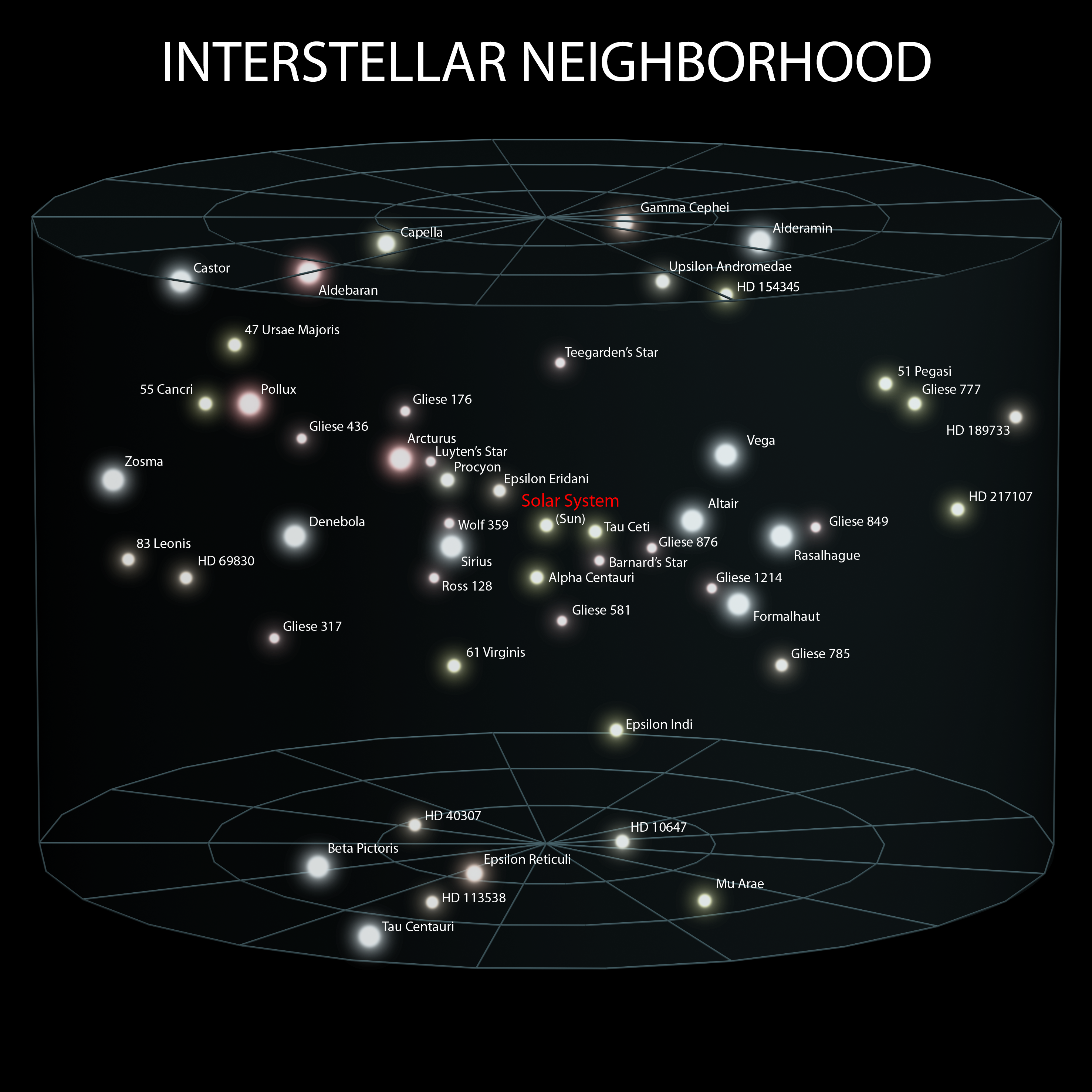
I'm tinkering with the idea of placing it "locally" in either the Perseus or Sagittarius Arm of the Milky Way galaxy.

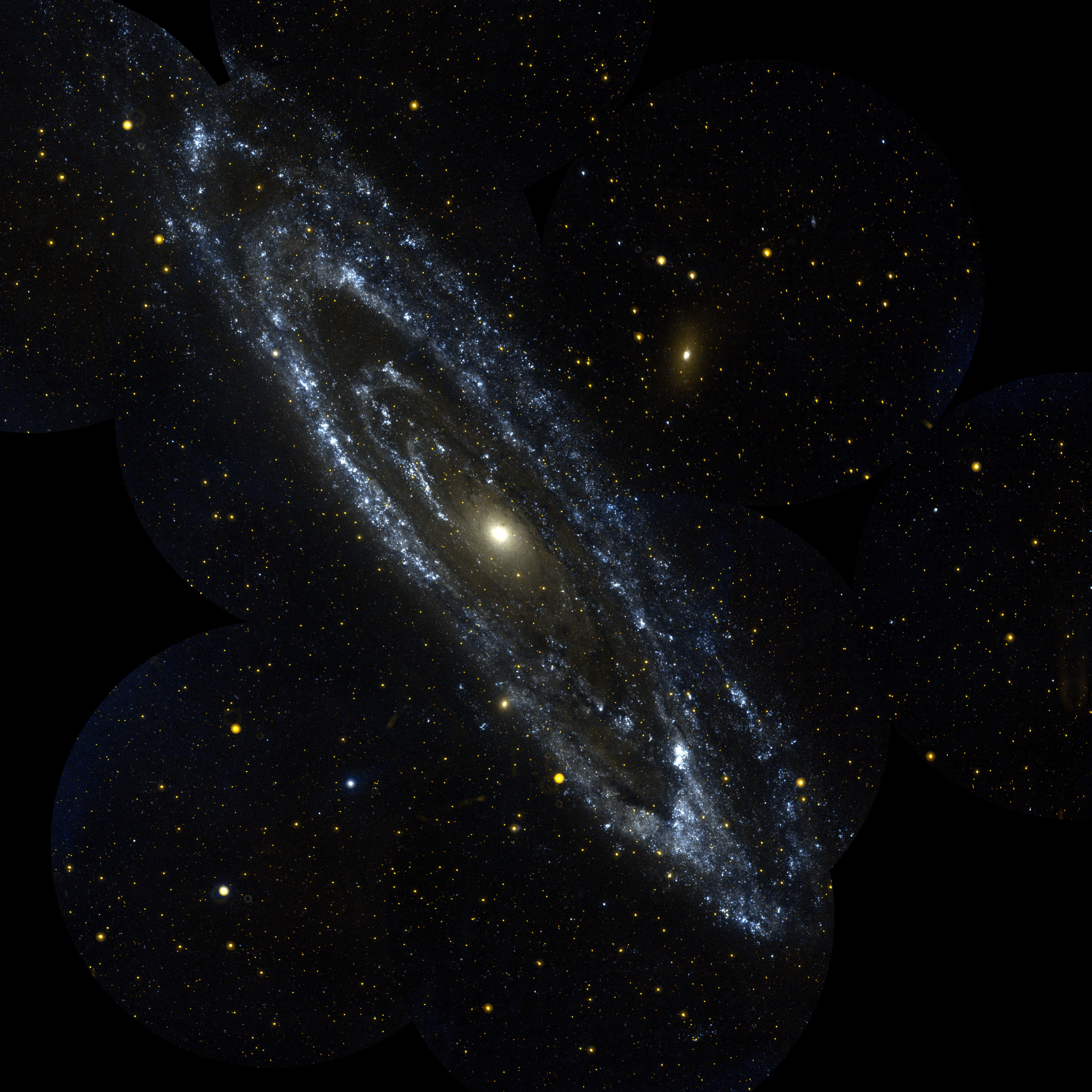
Or perhaps making it much more far flung and positioning it in the Andromeda Galaxy

The premise is that in a not-so-far future we have found other habitable areas, aka "Goldilocks zones", which aren't too far speculatively from where we are now. But geographically they are a long shot in that we know they are there and have Earth-like planets, but that's the extent of our knowledge. So we decide to fire massive colonization ships to each of these areas in an attempt to settle more space and form a cliche federation or empire of worlds. But something goes terribly wrong.
A ship named the Adventus - derived from Latin meaning "arrival, or coming to" - is sent through a wormhole/jump gate on a mission to colonize the zone. Upon coming out of the jump, the ship is struck by a wandering comet that was impossible to detect on previous scans. If I go with the jump gate arrival, the gate is destroyed with the ship. If I go with the wormhole idea, I would have to assume the too-convenient, spontaneous collapse of the naturally occurring wormhole. Or I might combine the two ideas and say that the technology is available for the ships to create the wormholes (essentially hyperspace jumping) but when the ship is lost, so is the "beacon" or black box that would indicate what the hell happened, thus failing to signal for rescue from other colony ships.
Another idea is that no beacons are expected to be sent until a world is colonized, meaning that no one is going to come looking for any "lost colonies" that don't report back. That seems like a stretch in that given the amount of planning and resources and sheer number of committed lives, I would think someone would be keeping tabs on a blinking radar screen.
However I settle the conundrum, the ship is lost and no one is riding to the rescue. No John Rolfs in space, I suppose.
Because it was designed as a colonization ship, all of the materials and foodstuffs needed to begin a new life were already loaded. All of the colonists were in cryo-sleep in various pods of 40-50. The skeleton crew of the ship were all killed and the black box that recorded the impact/wreck was lost. The emergency evacuation override of the ship was to target the nearest habitable planet and launch as many cryo-pods and cargo containers as possible to maximize the likelihood of survival.
Coming out of cryo-sleep is disorienting even in idea conditions. Given the emergency launch and the fact that no crew or records survived, all the passengers can recall is that they were sent "from the stars" to live on a new world. Other than a handful of supply containers, all else is lost.
The only surviving pods land thousands of miles apart on 2 of 5 continents because they were the ones facing the ship at the time. They don't even know if any other pods made the landing. These pockets of humanity have no idea that anyone else is on the world with them. But on this planet, the "standard" fantasy races of elves, dwarves, and gnomes (along with monstrous races) already exist.
Elves call the world Epheria or Epherius (from ephemeral - dream like)
Dwarves call the world Khorden (core den) or Khoruden - the runes are called Khoru (runes of the core)
Humans call the world Aventus, because that's as close as they can recall the name of the ship that jettisoned the pods to the planet.
The monstrous, savage races hail from a continent that is named Velusum (from lusus naturae "freak of nature")
**Several other mythology based names I like for other ships (or possible jump gates) are:
Hyperion - which may end up being a name of a world
Icarus - another doomed ship that crashed into a sun/star.
Prometheus - one of the first successful colony ships
Delos or Delphos - derived from Delphi
Atheum - derived from Athens
Sparatus - derived from Sparta and Spartacus
Hermeus or Hermean - a Mercury-like "dead world" named after Hermes (aka Mercury)
Aquilon - vaguely Latin for "north"
Meridium - vaguely Latin for "south"
Atlas - this would be a great classification for a heavy, carrier ship. Perhaps it's not a warship, but a resupply/support ship that brings additional cargo to established worlds.
I'm tinkering with the idea of placing it "locally" in either the Perseus or Sagittarius Arm of the Milky Way galaxy.
Or perhaps making it much more far flung and positioning it in the Andromeda Galaxy
The premise is that in a not-so-far future we have found other habitable areas, aka "Goldilocks zones", which aren't too far speculatively from where we are now. But geographically they are a long shot in that we know they are there and have Earth-like planets, but that's the extent of our knowledge. So we decide to fire massive colonization ships to each of these areas in an attempt to settle more space and form a cliche federation or empire of worlds. But something goes terribly wrong.
A ship named the Adventus - derived from Latin meaning "arrival, or coming to" - is sent through a wormhole/jump gate on a mission to colonize the zone. Upon coming out of the jump, the ship is struck by a wandering comet that was impossible to detect on previous scans. If I go with the jump gate arrival, the gate is destroyed with the ship. If I go with the wormhole idea, I would have to assume the too-convenient, spontaneous collapse of the naturally occurring wormhole. Or I might combine the two ideas and say that the technology is available for the ships to create the wormholes (essentially hyperspace jumping) but when the ship is lost, so is the "beacon" or black box that would indicate what the hell happened, thus failing to signal for rescue from other colony ships.
Another idea is that no beacons are expected to be sent until a world is colonized, meaning that no one is going to come looking for any "lost colonies" that don't report back. That seems like a stretch in that given the amount of planning and resources and sheer number of committed lives, I would think someone would be keeping tabs on a blinking radar screen.
However I settle the conundrum, the ship is lost and no one is riding to the rescue. No John Rolfs in space, I suppose.
Because it was designed as a colonization ship, all of the materials and foodstuffs needed to begin a new life were already loaded. All of the colonists were in cryo-sleep in various pods of 40-50. The skeleton crew of the ship were all killed and the black box that recorded the impact/wreck was lost. The emergency evacuation override of the ship was to target the nearest habitable planet and launch as many cryo-pods and cargo containers as possible to maximize the likelihood of survival.
Coming out of cryo-sleep is disorienting even in idea conditions. Given the emergency launch and the fact that no crew or records survived, all the passengers can recall is that they were sent "from the stars" to live on a new world. Other than a handful of supply containers, all else is lost.
The only surviving pods land thousands of miles apart on 2 of 5 continents because they were the ones facing the ship at the time. They don't even know if any other pods made the landing. These pockets of humanity have no idea that anyone else is on the world with them. But on this planet, the "standard" fantasy races of elves, dwarves, and gnomes (along with monstrous races) already exist.
Elves call the world Epheria or Epherius (from ephemeral - dream like)
Dwarves call the world Khorden (core den) or Khoruden - the runes are called Khoru (runes of the core)
Humans call the world Aventus, because that's as close as they can recall the name of the ship that jettisoned the pods to the planet.
The monstrous, savage races hail from a continent that is named Velusum (from lusus naturae "freak of nature")
**Several other mythology based names I like for other ships (or possible jump gates) are:
Hyperion - which may end up being a name of a world
Icarus - another doomed ship that crashed into a sun/star.
Prometheus - one of the first successful colony ships
Delos or Delphos - derived from Delphi
Atheum - derived from Athens
Sparatus - derived from Sparta and Spartacus
Hermeus or Hermean - a Mercury-like "dead world" named after Hermes (aka Mercury)
Aquilon - vaguely Latin for "north"
Meridium - vaguely Latin for "south"
Atlas - this would be a great classification for a heavy, carrier ship. Perhaps it's not a warship, but a resupply/support ship that brings additional cargo to established worlds.
Sunday, October 6, 2013
Even More Sci-Fi Ships
Just yesterday I found this amazing gallery on DeviantArt by one I.L. Jackson. Total it is 35 pages of awesome sci-fi art, but the ships in particular are what caught my eye...all 10 pages of them. And best yet is the fact that most of the ship designs are his very own.
The artist (who is also one hell of a writer) and I exchanged a few notes and he notified me that he'll soon have a web series coming out called Ascension Chronicles. Be watching for that!
In the meantime, be sure to check out his art. Do yourself a favor and read every word of his descriptions too. They give nearly every pic the oomph of an FTL jump.
The artist (who is also one hell of a writer) and I exchanged a few notes and he notified me that he'll soon have a web series coming out called Ascension Chronicles. Be watching for that!
In the meantime, be sure to check out his art. Do yourself a favor and read every word of his descriptions too. They give nearly every pic the oomph of an FTL jump.
Saturday, August 31, 2013
A Better Tomorrow?
Perhaps I'm a fatalist. Maybe I lack faith in the basic goodness of humanity. It could be I'm more influenced by dark-future sci fi than I realize.
A dystopian future isn't an uncommon idea in science fiction. With films like Elysium, Demolition Man, and Minority Report contrasting the gritty versus glossy tomorrow, I can't help but imagine a twisted underbelly to the literal green-peace of Venus City.
I'm not exactly a Luddite. I run a few blogs, relish wiki pages, and mostly because I have never smashed an automated stocking machine. However, I also swear against iphones, kindles, and Google glasses. It's not that I believe them to be bad ideas or products, I simply can't work anything with a touch screen. That, and I believe that herds of people could use much fewer shiny objects to distract them. Nothing irks me more than the thought a pedestrian with their head down over their tablet and white ear-buds dangling as they shuffle into oncoming traffic because they simply couldn't be bothered to pay fucking attention!
Also, think of how much we share, completely oblivious to the fact that we are sharing entirely too much. What isn't plugged into something else these days? Google knows which adds to show you based on your browser history and preferences before you even turn on your computer. And that assumes you ever turn it off. From the moment you open your eyes, you're bombarded with products you don't really need to live a life you don't actually live. Is fulfillment really about purchasing stuff? Shopping online to get the exact same thing (well perhaps in a different color, or a newer, better model) that everyone else got from the same virtual big box store.
Personally I find it terrifying to think of this as the City of 2050. Sure, farmtowers and smart buildings sound like a great idea. White-washed smartscrapers standing next to eco-dome parks carve a sparkling, sterile skyline. Bioluminescent trees act as organic streetlights and everyone lives every day to the fullest because machines to all the work. The power can't go out. Crimes are stopped before they occur. Diseases are cured. The air and water as as pure as Eden. All because everything from public utilities to government facilities, schools, hospitals, and transportation hum smoothly on one intertwining, nanotube nerve center. Nothing ever goes wrong because everything is alright...until it's not. Saskia Sassen asks the well-stated question "When does sensored become censored?" in this article.
Have books and movies not shown us over and over what happens when you take control away from us and give it to "them"? I, Robot for example. Terminator for another. Gamer.
If people are free to do as they !@#$%^&* well digitally please, what's to keep them from stirring up mischief? If we live longer and pursue intellectual education instead of material accumulation, who pays the bills? Who raises the children? Is breeding even a physical connection between people, or is Gattaca-esque where optimal genes are selected and children are grown in test tubes? Maybe gladiatorial humans like Jango Fett are bred because they fulfill some sick, entertaining purpose. Or perhaps only a limited number of the most desirable population are allowed to reproduce.
What if resources aren't as sustainable and space so abundant? Are whole families, neighborhoods, populations deemed expendable and systematically exterminated? Of course no one is aware of it because it's not that overt. The throw-aways are offered "something better" elsewhere. They board a glimmering train to nowhere, smile and wave to their used-to-neighbors and friends, and then lean back in plush seats as they're whisked away...never to be seen again. This could happen every 5-7 years as new data is correlated and tabulated and the herd must be thinned for the continuation of the future. This all takes place openly under the grinning guise of "betterment for all." I can see the holographic billboards now. "Board a train to a brighter life. Bring the whole family. The light at the end of the tunnel."
*Character ideas: Heaven Gates, I.M. "Mac" MacCool (from immaculate), June (mom) and daughters April, May, and Summer Ward, (sisters) Hope and Faith Cross, Warden White.
Ultimately, are we truly in control of our own destiny and well being? Or are we gladly handing over the reins/reigns of responsibility to Rosie the Robot because we're eager to be clean, "happy", healthy, spoiled children frolicking in the sterile sunshine? If government, corporations, we are not in control of our lives...who or what is?
A dystopian future isn't an uncommon idea in science fiction. With films like Elysium, Demolition Man, and Minority Report contrasting the gritty versus glossy tomorrow, I can't help but imagine a twisted underbelly to the literal green-peace of Venus City.
I'm not exactly a Luddite. I run a few blogs, relish wiki pages, and mostly because I have never smashed an automated stocking machine. However, I also swear against iphones, kindles, and Google glasses. It's not that I believe them to be bad ideas or products, I simply can't work anything with a touch screen. That, and I believe that herds of people could use much fewer shiny objects to distract them. Nothing irks me more than the thought a pedestrian with their head down over their tablet and white ear-buds dangling as they shuffle into oncoming traffic because they simply couldn't be bothered to pay fucking attention!
Also, think of how much we share, completely oblivious to the fact that we are sharing entirely too much. What isn't plugged into something else these days? Google knows which adds to show you based on your browser history and preferences before you even turn on your computer. And that assumes you ever turn it off. From the moment you open your eyes, you're bombarded with products you don't really need to live a life you don't actually live. Is fulfillment really about purchasing stuff? Shopping online to get the exact same thing (well perhaps in a different color, or a newer, better model) that everyone else got from the same virtual big box store.
Personally I find it terrifying to think of this as the City of 2050. Sure, farmtowers and smart buildings sound like a great idea. White-washed smartscrapers standing next to eco-dome parks carve a sparkling, sterile skyline. Bioluminescent trees act as organic streetlights and everyone lives every day to the fullest because machines to all the work. The power can't go out. Crimes are stopped before they occur. Diseases are cured. The air and water as as pure as Eden. All because everything from public utilities to government facilities, schools, hospitals, and transportation hum smoothly on one intertwining, nanotube nerve center. Nothing ever goes wrong because everything is alright...until it's not. Saskia Sassen asks the well-stated question "When does sensored become censored?" in this article.
Have books and movies not shown us over and over what happens when you take control away from us and give it to "them"? I, Robot for example. Terminator for another. Gamer.
If people are free to do as they !@#$%^&* well digitally please, what's to keep them from stirring up mischief? If we live longer and pursue intellectual education instead of material accumulation, who pays the bills? Who raises the children? Is breeding even a physical connection between people, or is Gattaca-esque where optimal genes are selected and children are grown in test tubes? Maybe gladiatorial humans like Jango Fett are bred because they fulfill some sick, entertaining purpose. Or perhaps only a limited number of the most desirable population are allowed to reproduce.
What if resources aren't as sustainable and space so abundant? Are whole families, neighborhoods, populations deemed expendable and systematically exterminated? Of course no one is aware of it because it's not that overt. The throw-aways are offered "something better" elsewhere. They board a glimmering train to nowhere, smile and wave to their used-to-neighbors and friends, and then lean back in plush seats as they're whisked away...never to be seen again. This could happen every 5-7 years as new data is correlated and tabulated and the herd must be thinned for the continuation of the future. This all takes place openly under the grinning guise of "betterment for all." I can see the holographic billboards now. "Board a train to a brighter life. Bring the whole family. The light at the end of the tunnel."
*Character ideas: Heaven Gates, I.M. "Mac" MacCool (from immaculate), June (mom) and daughters April, May, and Summer Ward, (sisters) Hope and Faith Cross, Warden White.
Ultimately, are we truly in control of our own destiny and well being? Or are we gladly handing over the reins/reigns of responsibility to Rosie the Robot because we're eager to be clean, "happy", healthy, spoiled children frolicking in the sterile sunshine? If government, corporations, we are not in control of our lives...who or what is?
Sunday, August 11, 2013
Mission to Mars
100,000 colonists flock to Mars - well, ok, so not really. But just think of what this could mean for humanity. Let us suppose it is a solid "go." What follows is a loose use of history, numbers, and supposition.
Thousands of years ago, stargazers of the ancient world looked up to a "wandering" red star. Later scholars devised it was in fact a planet. Later still, through use of the telescope, it was determined that their were mountains and canals on this now barren world. And what began as pulp fiction in 1912 with Edgar Rice Burroughs is now a reality.
After nearly a decade of isolated, rigorous training, the first in a long line of humans from Earth will launch for the Red Planet in September 2022. ETA roughly 200 days later. Spring 2023 marks a momentous achievement of mankind...extraterranial (yes I know it's not a word) colonization. Another, not-so-small step for man, and a gigantic leap for mankind. Not too shabby for a species that first walked on the moon only a half century earlier.
The first colonists, 2 men and 2 women, will be "alone" on Mars with 5,500 lbs of supplies for approximately 2 years. Trained in everything from farming and medicine to engineering and exploration, these brave souls are the first of what will be countless others to abandon Earth for a one way trip to an alien world. Within the decade that follows another 40 will make the trek with a total load of near 25 tons of everything needed to pave the way for another 30,000 neighbors. The exodus numbers continue to swell to 100,000 and beyond.
Just as John Rolfe is remembered as a hero of the New World, and Neil Armstrong is remembered as a hero of the Space Race, these intrepid explorers will share the mantle of heroship (yeah, another not-a-real-word) for whole of humanity. Who's to say what will be said of them 100, 200, 500 years from their first bouncing step into the red dust? What is to say that, even with the technology of tomorrow "lighting the dark", that these settlers will fair better than the dismal 12% survival rate of the Jamestown Colony? Let us hope the have sense enough to name the colony something like Neoterra instead of Roanoke II.
Taking a much more optimistic view of life on Mars is the Generation One: Children of Mars Kickstarter.
Yes, the goal has already been met. But with 25 days left to go, there's still time to give - every little bit helps. As much as I'd like to see myself in comicbook form, I can't afford the $500 to be drawn in.
Thousands of years ago, stargazers of the ancient world looked up to a "wandering" red star. Later scholars devised it was in fact a planet. Later still, through use of the telescope, it was determined that their were mountains and canals on this now barren world. And what began as pulp fiction in 1912 with Edgar Rice Burroughs is now a reality.
After nearly a decade of isolated, rigorous training, the first in a long line of humans from Earth will launch for the Red Planet in September 2022. ETA roughly 200 days later. Spring 2023 marks a momentous achievement of mankind...extraterranial (yes I know it's not a word) colonization. Another, not-so-small step for man, and a gigantic leap for mankind. Not too shabby for a species that first walked on the moon only a half century earlier.
The first colonists, 2 men and 2 women, will be "alone" on Mars with 5,500 lbs of supplies for approximately 2 years. Trained in everything from farming and medicine to engineering and exploration, these brave souls are the first of what will be countless others to abandon Earth for a one way trip to an alien world. Within the decade that follows another 40 will make the trek with a total load of near 25 tons of everything needed to pave the way for another 30,000 neighbors. The exodus numbers continue to swell to 100,000 and beyond.
Just as John Rolfe is remembered as a hero of the New World, and Neil Armstrong is remembered as a hero of the Space Race, these intrepid explorers will share the mantle of heroship (yeah, another not-a-real-word) for whole of humanity. Who's to say what will be said of them 100, 200, 500 years from their first bouncing step into the red dust? What is to say that, even with the technology of tomorrow "lighting the dark", that these settlers will fair better than the dismal 12% survival rate of the Jamestown Colony? Let us hope the have sense enough to name the colony something like Neoterra instead of Roanoke II.
Taking a much more optimistic view of life on Mars is the Generation One: Children of Mars Kickstarter.
Yes, the goal has already been met. But with 25 days left to go, there's still time to give - every little bit helps. As much as I'd like to see myself in comicbook form, I can't afford the $500 to be drawn in.
Sunday, August 4, 2013
Looking Back
You must study the past to understand the future.
Whether you're doing a lot of "soft science" hand-waving, or you're obsessed with consistent "hard science" numbers, you need to know what you're doing. You need to have a plan in mind for what lies ahead. A good way to begin is to look backward. Where did you come from? How? Why?
These are incredibly daunting questions. Whether you hold multiple degrees in biophysics, engineering, and predictive political science, or if you're just a kid with a keyboard and a big imagination, you can't possible keep everything straight in your head. That's where I find this site very helpful.
http://www.historyoftheuniverse.com/ and detailed timeline.
I know it covers a lot of ground, so take it a bit at a time. Read one chapter every few days and mull it over between readings. I promise, you won't get bored.
Let's say you don't want to build in the aspect of creationism versus evolution. Fine, skip that. If it's not essential to the story you want to tell, don't stress about it. Maybe the clash of science versus religion is your bread and butter, the cornerstone of what drives your tale. Or maybe science and religion live in complete harmony. Either way, you need to know what you're talking about. Study up.
But if you're not so concerned with what came before and you just want a basic breakdown of where we are now, well then, the last few chapters are enough to get you going.
Whether you're doing a lot of "soft science" hand-waving, or you're obsessed with consistent "hard science" numbers, you need to know what you're doing. You need to have a plan in mind for what lies ahead. A good way to begin is to look backward. Where did you come from? How? Why?
These are incredibly daunting questions. Whether you hold multiple degrees in biophysics, engineering, and predictive political science, or if you're just a kid with a keyboard and a big imagination, you can't possible keep everything straight in your head. That's where I find this site very helpful.
http://www.historyoftheuniverse.com/ and detailed timeline.
I know it covers a lot of ground, so take it a bit at a time. Read one chapter every few days and mull it over between readings. I promise, you won't get bored.
Let's say you don't want to build in the aspect of creationism versus evolution. Fine, skip that. If it's not essential to the story you want to tell, don't stress about it. Maybe the clash of science versus religion is your bread and butter, the cornerstone of what drives your tale. Or maybe science and religion live in complete harmony. Either way, you need to know what you're talking about. Study up.
But if you're not so concerned with what came before and you just want a basic breakdown of where we are now, well then, the last few chapters are enough to get you going.
Tuesday, July 23, 2013
Cosmos...Again
Make it so, Number One!!
Neil deGrasse Tyson hosts COSMOS
This leaves me wondering when Michio Kaku is going to get his own show. I love that guy!
Bill Nye, Newton's Apple, and 3 2 1 Contact weren't slouches by a long shot, but if I'd had science teachers like Sagan, deGrasse Tyson, and Kaku who knows...maybe I'd have volunteered to be among the first to colonize Mars.
Instead I chose to study history, anthropology, archaeology, and sociology which lead me to look down/backwards/inwards instead of up/forward/outward. But comparing those fields is astounding when you realize the same species that did cave paintings and persecuted scientific "heretics" also launched the Hubble telescope and now wear Google glasses.
PS My chosen fields of study and many a movie teach us that the first colonists always have a terrible time of it!
Neil deGrasse Tyson hosts COSMOS
This leaves me wondering when Michio Kaku is going to get his own show. I love that guy!
Bill Nye, Newton's Apple, and 3 2 1 Contact weren't slouches by a long shot, but if I'd had science teachers like Sagan, deGrasse Tyson, and Kaku who knows...maybe I'd have volunteered to be among the first to colonize Mars.
Instead I chose to study history, anthropology, archaeology, and sociology which lead me to look down/backwards/inwards instead of up/forward/outward. But comparing those fields is astounding when you realize the same species that did cave paintings and persecuted scientific "heretics" also launched the Hubble telescope and now wear Google glasses.
PS My chosen fields of study and many a movie teach us that the first colonists always have a terrible time of it!
Wednesday, July 10, 2013
Sci-Fi Vehicles Collections
All of the following, and much much more, can be found at 3drt.com
If you have the money to put down, why not use it to support art?
Naval Vessels
Mech Robots Megapack
Hover Tanks
Sci-Fi Tanks
Sci-Fi Forces Megapack
Alien Invasion
Alien Motherships
Sci-Fi Gunships
Sci-Fi Fighters
Fighters Fleet Megapack
Sci-Fi Dropships
Sci-Fi Airspace
Space Stations
If you have the money to put down, why not use it to support art?
Naval Vessels
Mech Robots Megapack
Hover Tanks
Sci-Fi Tanks
Sci-Fi Forces Megapack
Alien Invasion
Alien Motherships
Sci-Fi Gunships
Sci-Fi Fighters
Fighters Fleet Megapack
Sci-Fi Dropships
Sci-Fi Airspace
Space Stations
Subscribe to:
Posts (Atom)